Local Food Economy
Bristol veg shops: Keeping it in the family
By Tilda Teale
Local Food Economy
By Tilda Teale

Bristol’s high streets haven’t always been dominated by chain stores and charity shops – once, they were built on family trades, familiar faces, and businesses passed down through generations. While much of that world has faded, a few local gems are still holding onto that tradition, offering not just great food but the kind of community connection supermarkets can’t replicate. Tilda Teale reports.
On the wall upstairs in the Bristol Library there is an old illustration of North Street, Bedminster, from 1932. Each shop front is labelled to show what it contained; a jewellers, a cobblers, a hat shop, and so on. It is likely that whoever worked in these shops also owned them, and that their learned craft was passed down through the generations, so the shops stayed within the family.
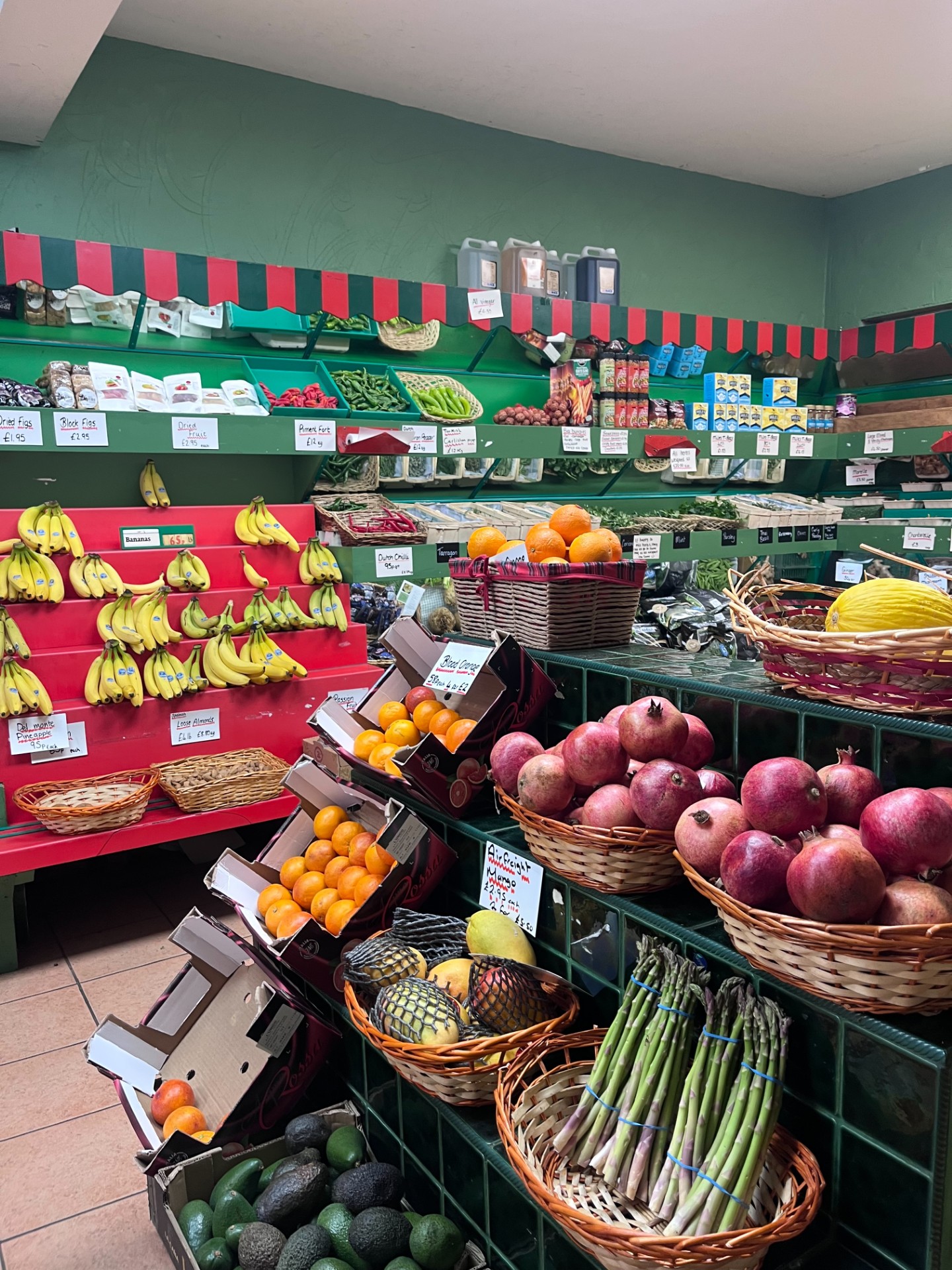
This family-ownership is largely gone from North Street, and the road is lined with charity shops or little cafés. Ashton Fruit Shop however, still retains its family-run charm. Two brothers, Mike and Mark Rudges, took over the greengrocers, originally a fishmonger, then briefly a piano shop, 20 years ago and now the shop has a dedicated customer base who come not only for great quality, affordable fruit and veg, but for that personal familiarity only possible in small, local businesses. To stock the shop each day, Mike is up at 2am to get to the Bristol fruit market in St Philips Marsh to meet with veg wholesalers bringing in the best veg from local farms and European produce while it is still fresh.
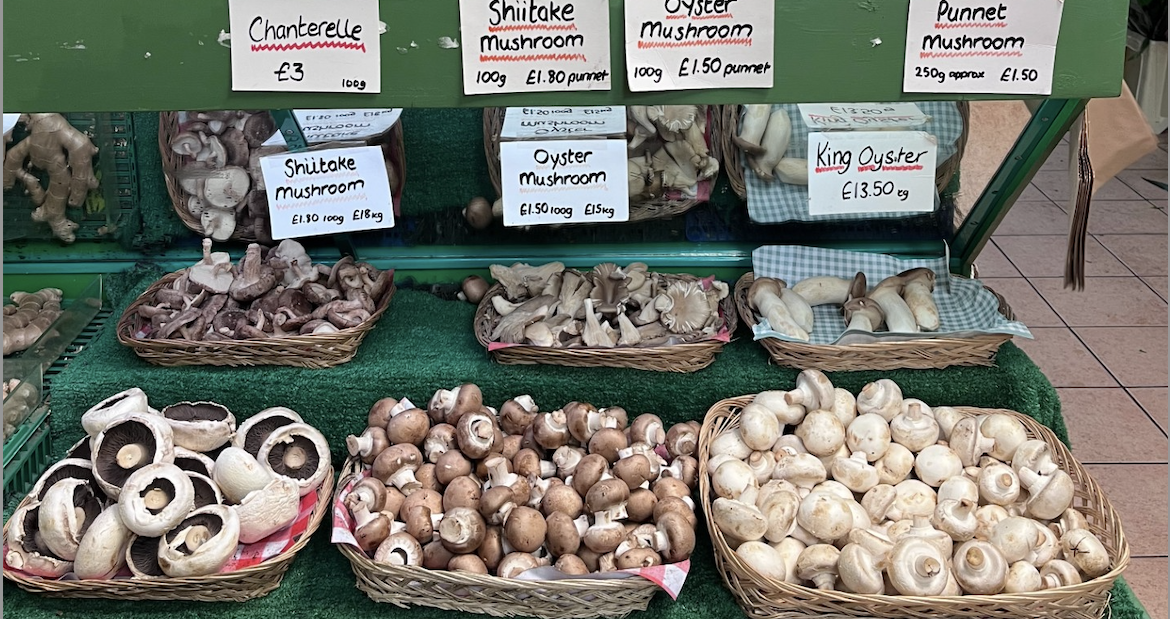
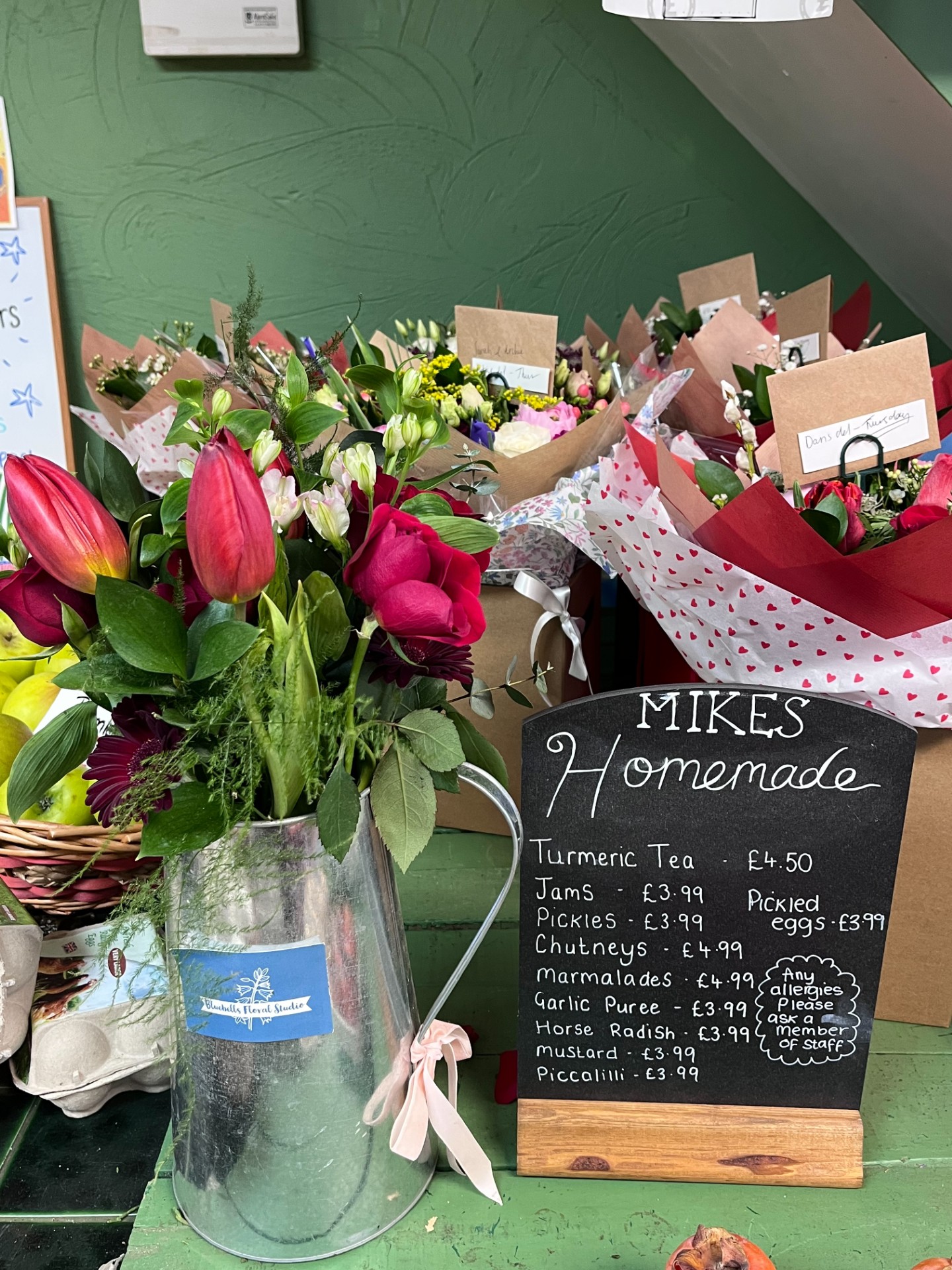
People often think fruit and veg shops are more expensive than buying the equivalent in a Tesco’s, or a Sainsbury’s. But this is not the case. The best part of Ashton is the huge variety of handpicked veg on offer, from king oyster mushrooms to their home-made turmeric tea newly branded “Arrrhh gold” to rare fruit like persimmons, and every kind of herb.
You can be more sustainable with your purchases by buying exactly what you need, for example all the herbs can be bought per sprig, reducing plastic packaging and food waste when unused herbs are left rotting at the back of the fridge. By the checkout there will always be reduced veg on offer – last time I went in, I nabbed a huge box of king oyster mushrooms for £1 which were fine to eat days later. This is where the benefits of going to the local fruit and veg shop will win over Aldi or Lidl.
“We would rather give the produce away for free than see it go to waste; the only waste we have at the end of the day are the wicker baskets that we can’t break down ourselves.” Harley Rudge told me, who has worked in the shop for nearly 10 years, starting when she was 14, and knows the names (and shopping lists) of many of the regular customers. “We have lots of older customers who have been coming here for years and come in for a chat and just to see a friendly face.”
The family are now branching out from veg and making their own branded produce. Their turmeric tea brewed in the back of the shop and popular with customers for years, has now been so popular that the family have trademarked the recipe and developed a brand.
For those who don’t live in South Bristol, another family-owned favourite is Easton’s Bristol Sweet Mart. Whenever I go into this store I get VERY excited. It has everything I daydream about eating, especially the hot food counter that sells home-made samosas, Indian sweets made of condensed milk, deep-fried paneer balls and so much more.
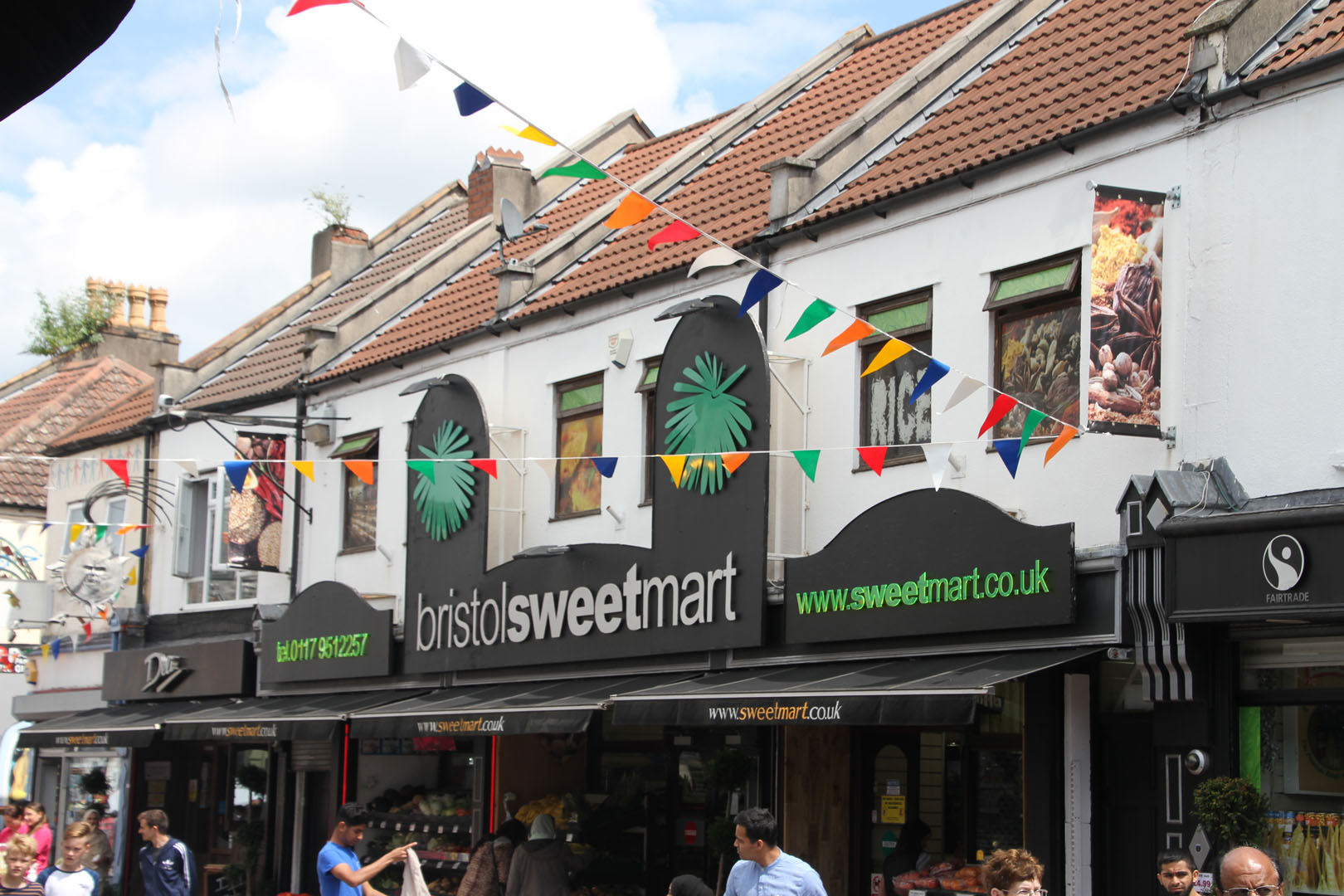
The origins of Sweet Mart date back to the 70s after Kassam Ismail Majothi, and his wife Fatma, arrived in Bristol after fleeing the Idi Amin regime in Uganda and was given the shop at low rent by a local shopkeeper from Pakistan. The shop has been passed down through the family and now stocks around 12,000 products and employs around 40 people.

Other family-run greengrocers that still retain a personal touch include Gardners Patch in Bishopston which has also served the local community since 1970. Brislington also has Sandy Park Greengrocers, a firm favourite for their signature fresh juices.
It is this history and personal touch that makes shopping from family-run small businesses on the high street special and more sustainable. In a world where most purchases arrive by a stressed Amazon delivery driver that takes a shot of you half-opening the door in a dressing gown, supporting small businesses is even more important. By shopping at family-run store to feed your own family, you are also taking part in a generational story that keeps people on the high street, making connections and forming community ties that are so important to people in need.
To stay updated on future events, job opportunities and news, don’t forget to sign up for the Bristol Good Food Update at bristolgoodfood.org/newsletter.
So, what change do you want to see happen that will transform food in Bristol by 2030? Do you already have an idea for how Bristol can make this happen? Join the conversation now.
* Required field
Local Food Economy
Local Food Economy

Local Food Economy
Local Food Economy


